
The Meaning & Power of the 21 Taras
The 21 Taras represent the many compassionate manifestations of Tara, the goddess of protection, healing, and swift action. Each form embodies unique qualities that help remove obstacles, grant blessings, and guide practitioners toward spiritual awakening.
Artwork Description
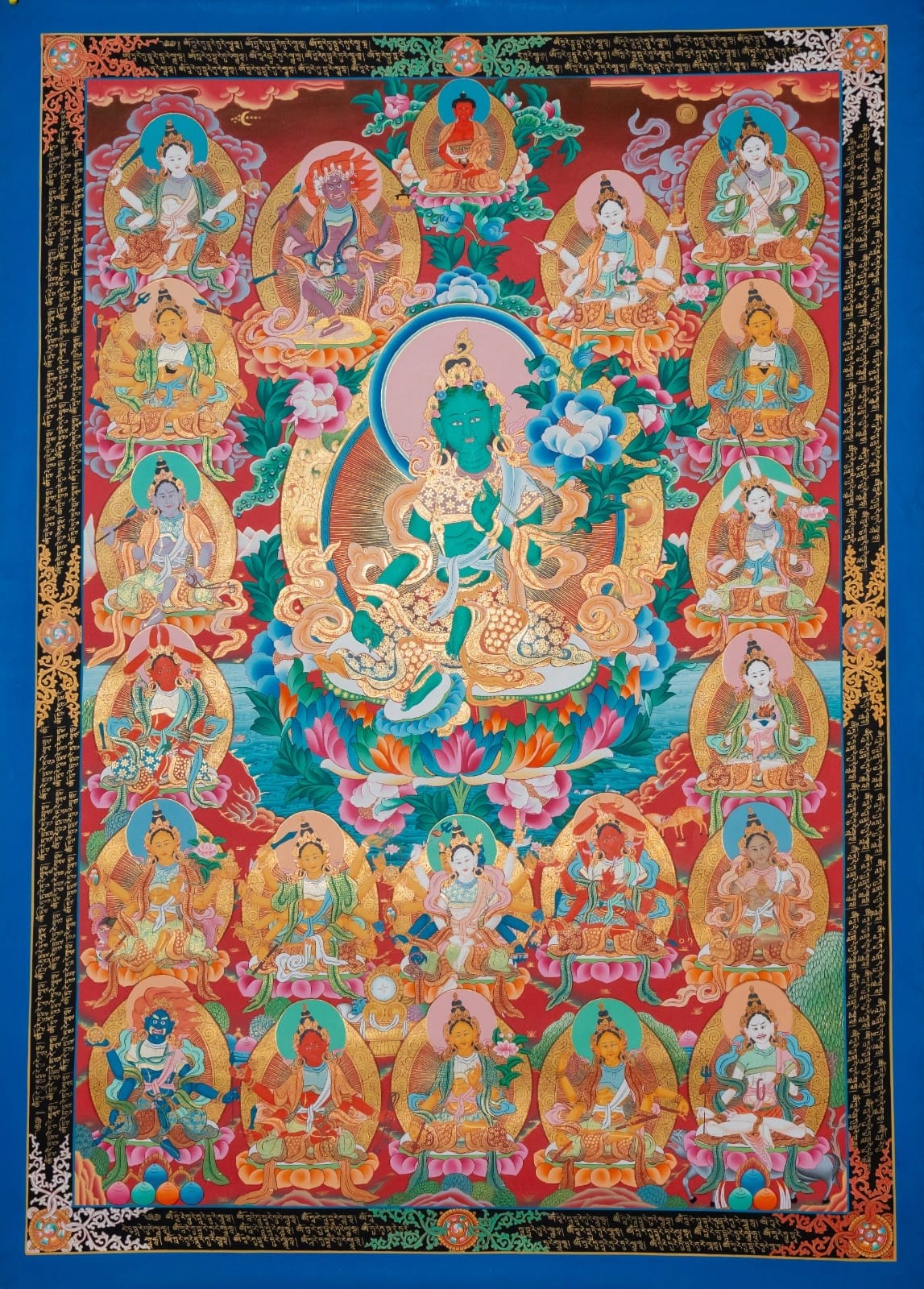
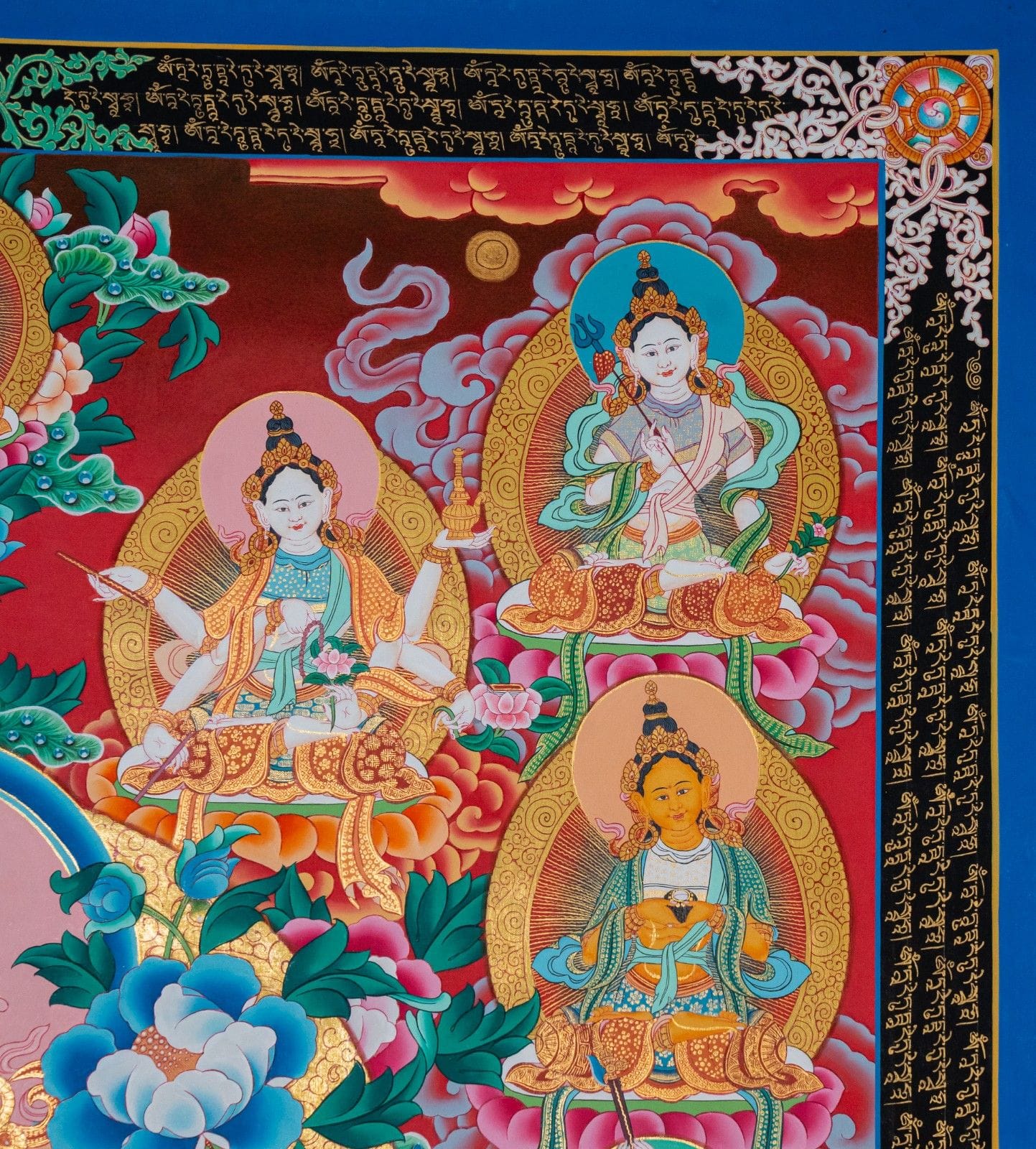
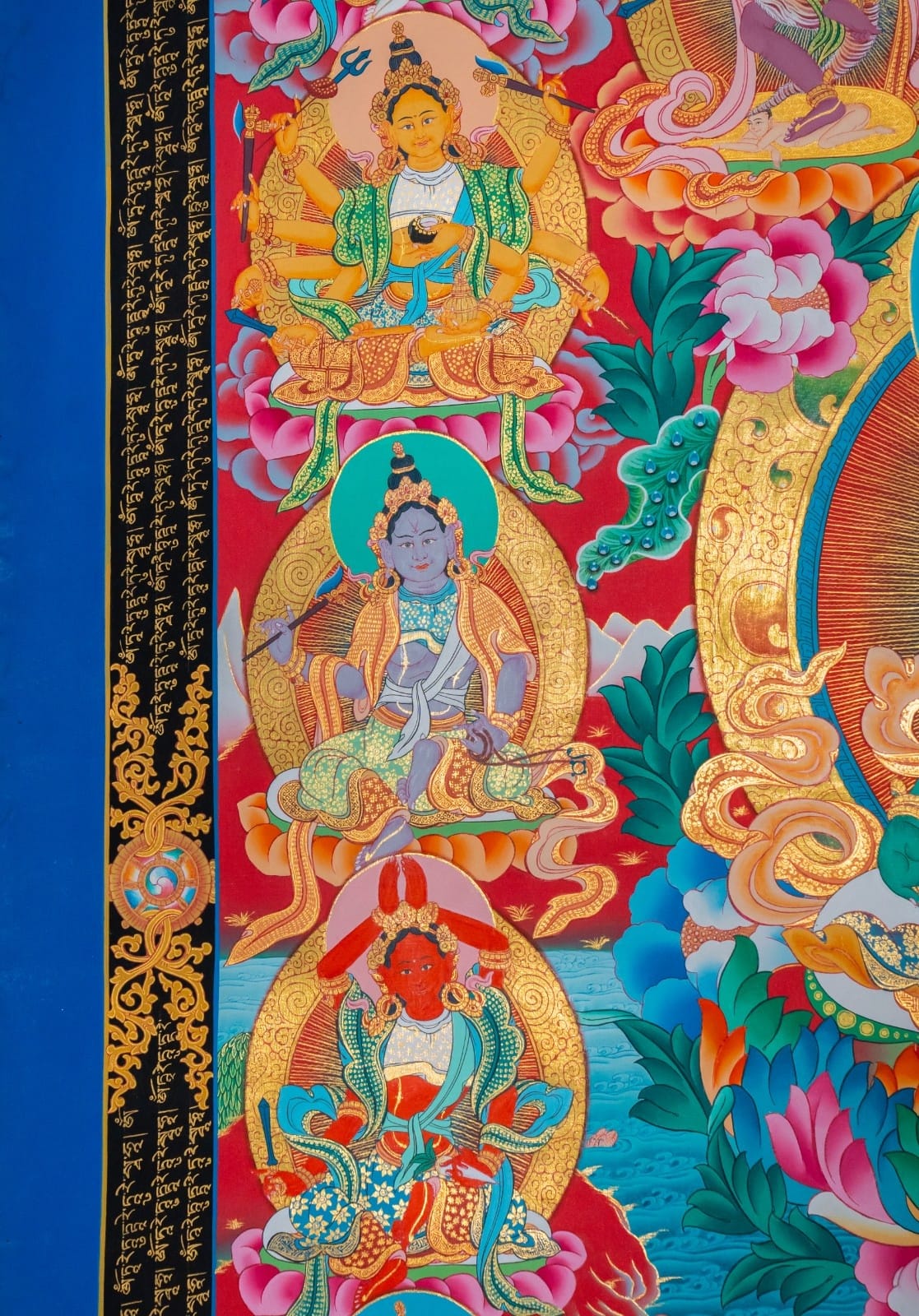
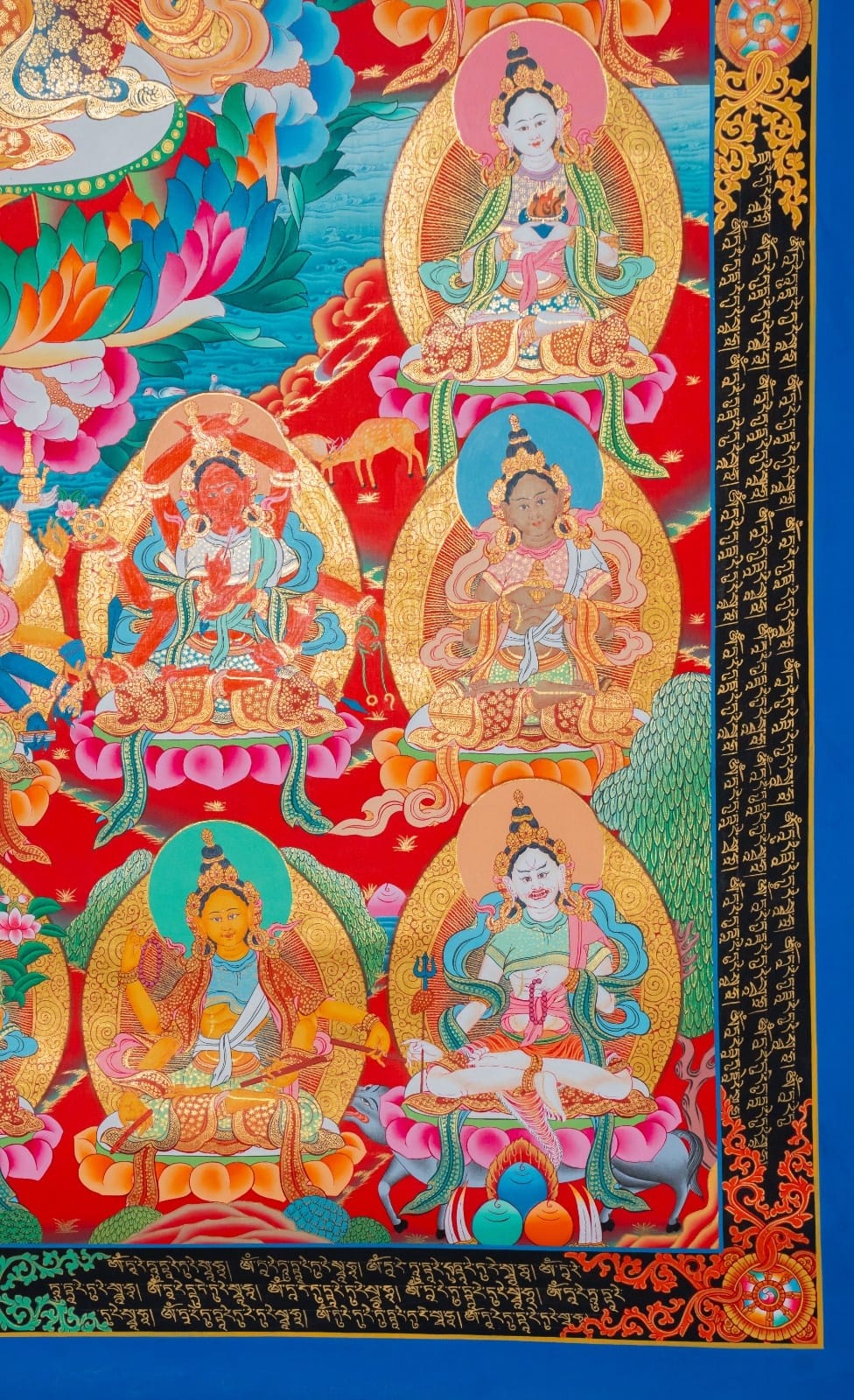
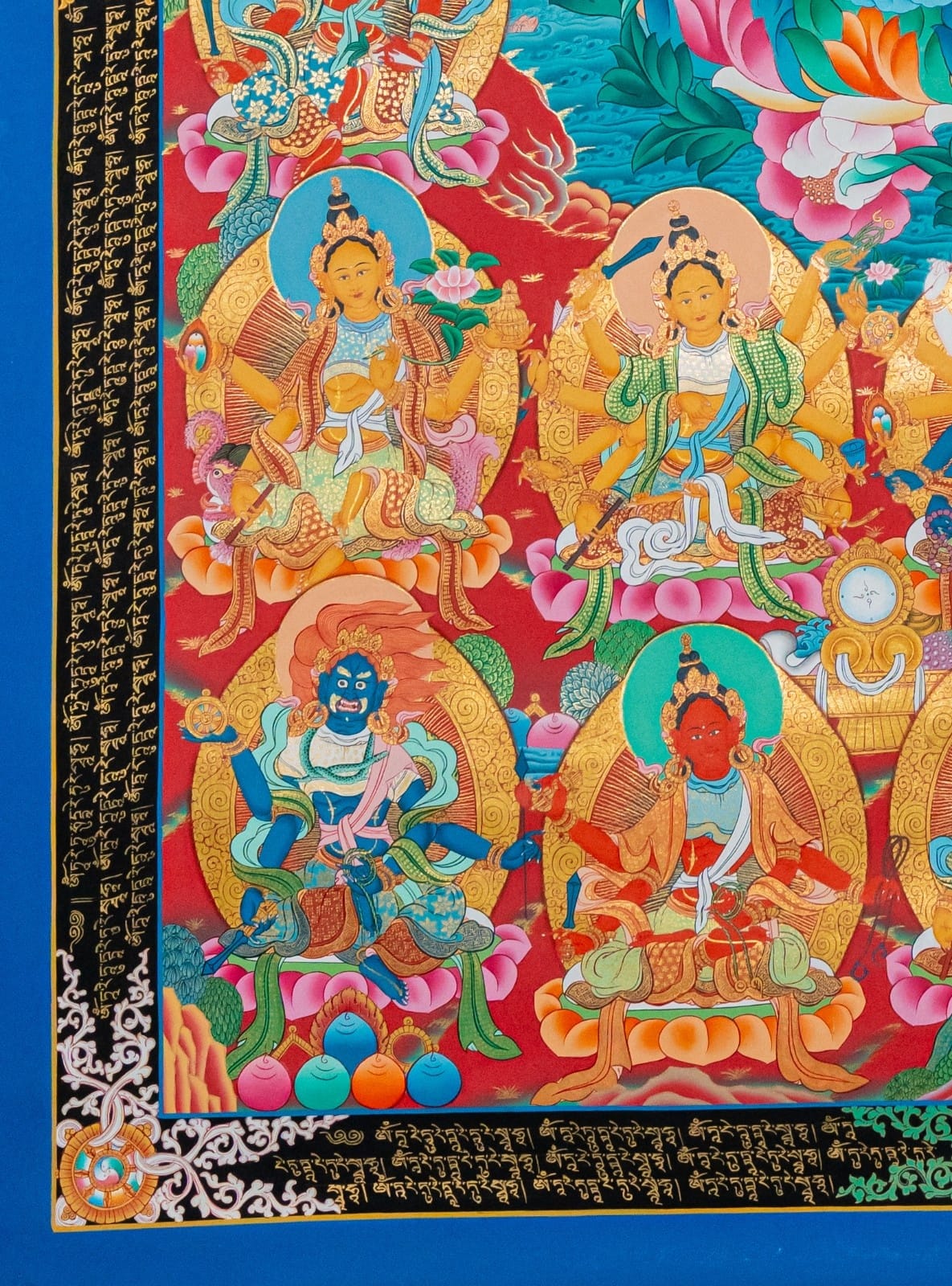
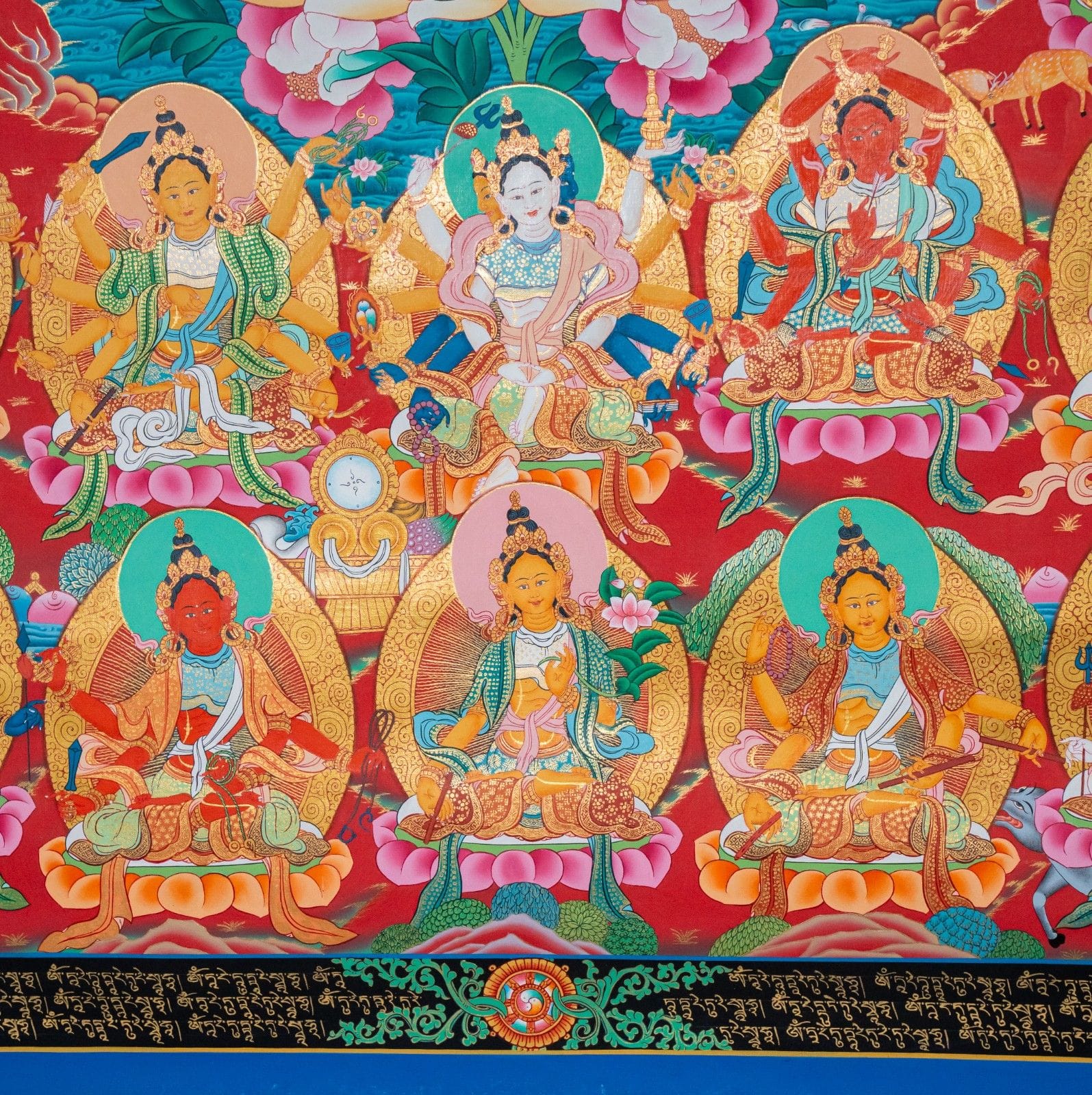
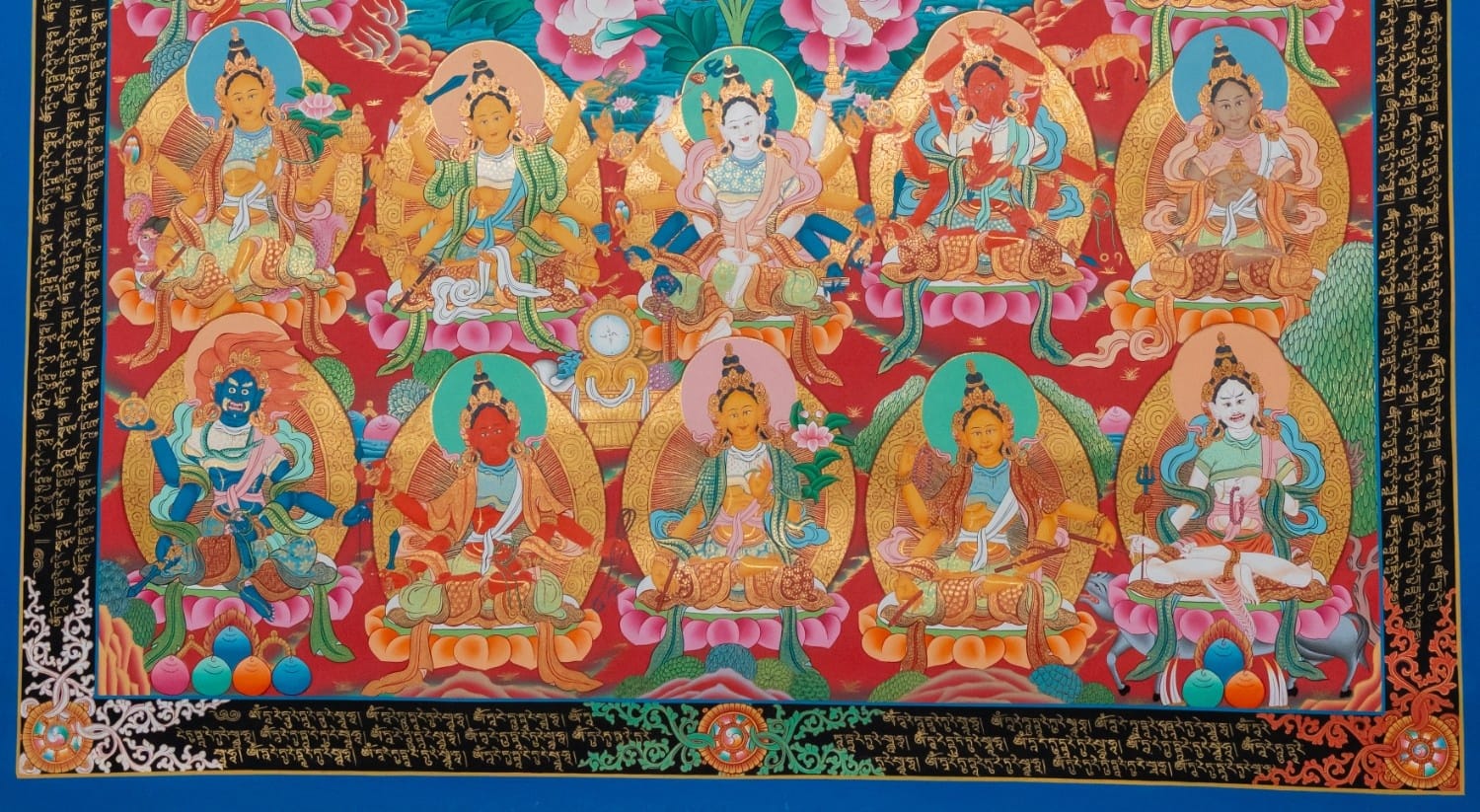
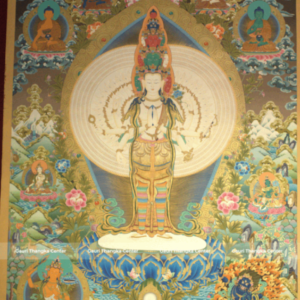
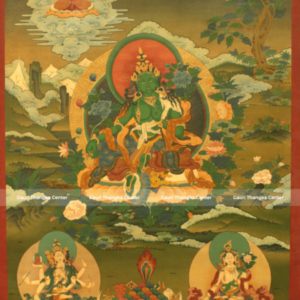
This 21 Tara thangka brings together all twenty-one emanations of Tara in one composition, the female Bodhisattva known across Tibetan Buddhism as the swift protector who responds the moment she is called on. At the centre sits Green Tara, the most widely practiced form and the source the other twenty are said to emanate from. Around her, each remaining Tara appears in her own colour, posture, and gesture, together forming a complete visual map of compassion in action.
A master artist paints every figure by hand using traditional Tibetan mineral and natural pigments, with genuine gold dust worked into the details, on organic cotton canvas prepared the traditional way. Collectors and practitioners use this thangka for daily meditation, for reciting the Praise to the 21 Taras, as a blessing object in the home, or simply as a striking centrepiece for a meditation room or shrine.
About the 21 Taras
Tara’s name comes from the Sanskrit word for star, or “she who saves.” Every major school of Tibetan Buddhism honours her as the swift-acting embodiment of compassion. The twenty-one forms come from a Sanskrit hymn traditionally attributed to the Indian master Suryagupta. Monasteries still recite it daily as part of standard liturgy, since each stanza describes one form of Tara in detail: her colour, her posture, her mantra, and the specific protection she extends.
The central Green Tara figure represents active compassion and is often shown with one leg extended, already stepping forward to help. Her calmer counterpart, White Tara, is associated with longevity and peaceful grace rather than swift action. The surrounding Taras in this 21 Tara thangka appear in white, yellow, red, and black, each colour carrying its own function within the set.
Symbolism of the 21 Tara Thangka
- Colour groupings: White forms pacify illness, conflict, and obstacles. Yellow forms increase prosperity and wisdom. Red forms magnetise and overpower external threats. Black or dark blue forms represent wrathful activity and are used when gentler means have failed.
- Extended right leg: Seen on Green Tara and several emanations, signalling readiness to act immediately rather than remain in still contemplation.
- Utpala flower: Held by nearly every Tara, standing for purity that rises untouched out of difficult conditions.
- Mudras: Each hand gesture corresponds to the specific blessing described in that Tara’s verse.
- Gold detailing: Marks the crowns, jewellery, and halos of enlightened beings, signifying their awakened nature.
The Story Behind the 21 Taras
The twenty-one forms trace back to the Ekavimshatistotra, the Praise in Twenty-One Homages to Tara, a hymn credited to the Indian master Suryagupta. Once translated into Tibetan, the Gelug, Kagyu, Nyingma, and Sakya schools all absorbed it into daily liturgy. As a result, Tibetan Buddhists have made it one of the most recited texts in the Tibetan Buddhist canon. Each stanza opens with homage to Tara and describes one distinct emanation: her appearance, her mantra, and her sphere of protection.
Painters have worked from these verses for centuries. Exact iconography shifts slightly between lineages, but the underlying structure, one composite deity expressing herself through twenty-one distinct forms, has stayed remarkably consistent.
Important Information
- Our artists hand-paint each piece, making every one unique.
- Slight colour variations may occur due to lighting and screen settings
- Size excludes border
- Packed securely in a PVC tube
- Import duties/taxes (if any) are the buyer’s responsibility. See our shipping and returns policy for details
Why Choose This Thangka
- Spiritual Practice: Supports meditation and daily recitation of the Praise to the 21 Taras, offering a direct anchor for cultivating compassion and protection.
- Sacred Decor: Serves as a striking centrepiece for a shrine or meditation room, while suiting offices and contemporary homes just as well.
- Cultural Heritage: Reflects a text still recited daily across Tibetan Buddhist schools, hand-painted in the authentic Nepali thangka lineage.
- Collectible Value: A complex, museum-quality composition featuring genuine mineral pigment and gold work, a meaningful gift for practitioners and collectors.
Have questions about shipping, care, or authenticity? Visit our Thangka FAQ for answers to common questions about our hand-painted thangkas.
Reviews
There are no reviews yet.