
What is Thangka Painting?
Definition of Thangka Art
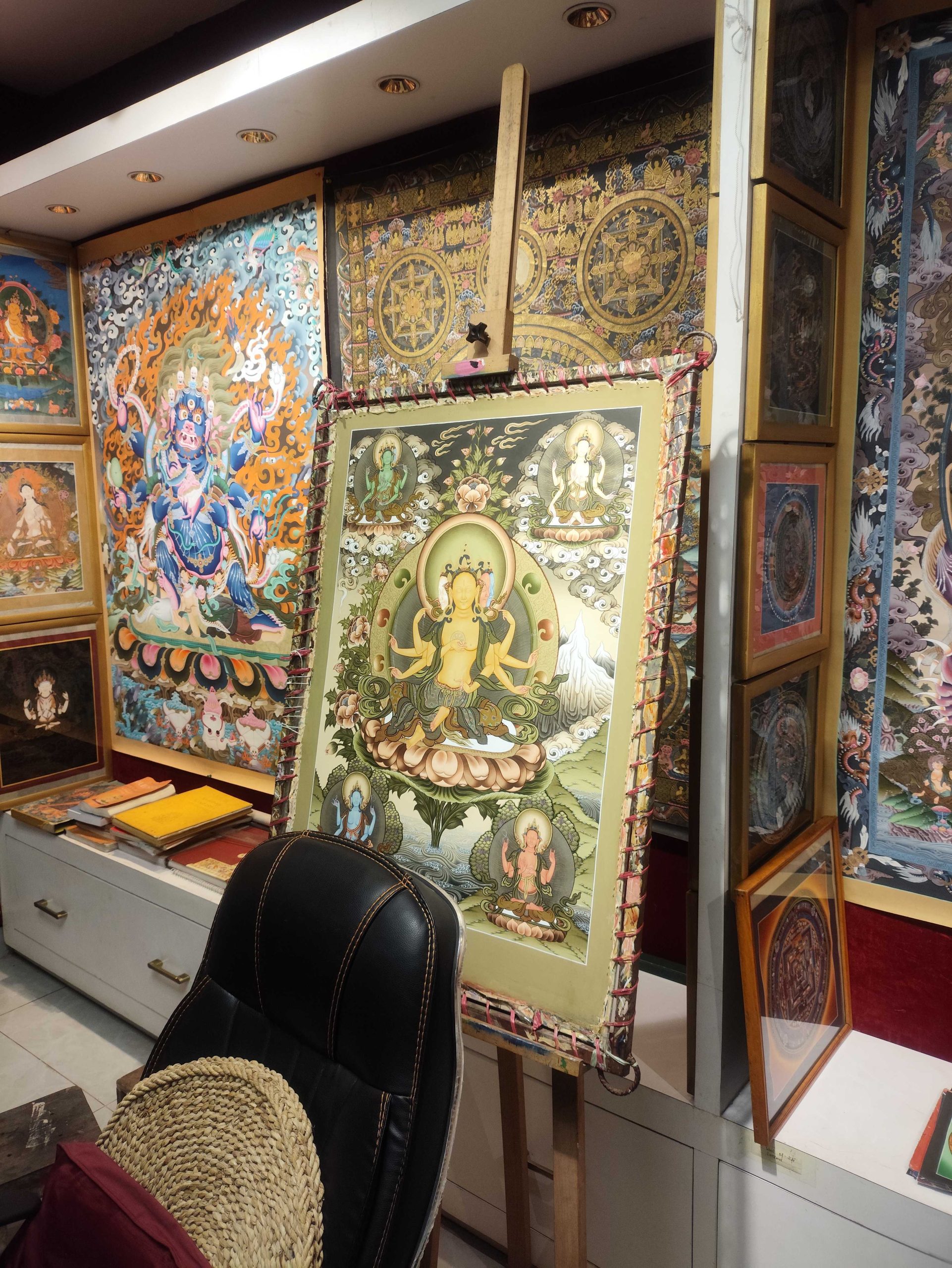
Thangka painting is a traditional form of sacred Buddhist art created on cotton or silk fabric. It usually depicts Buddhist deities, mandalas, spiritual symbols, or scenes from religious stories. Unlike regular paintings, thangkas are not just decorative, they are used for meditation, teaching, and spiritual practice.
Key Elements of a Thangka
A traditional thangka includes several important elements:
- Central deity or subject – the main focus of the artwork
- Precise geometry – strict proportions based on ancient guidelines
- Symbolic colors – each color has spiritual meaning (e.g., gold for enlightenment)
- Natural materials – mineral pigments and sometimes 24K gold
- Brocade frame – silk fabric used to mount the painting
History of Thangka Painting in Nepal
Origins in Tibetan Buddhism
Thangka painting originated within Tibetan Buddhism around the 7th century. These artworks were used by monks as teaching tools to explain Buddhist philosophy and guide meditation practices.
Evolution in Nepal
Nepal, especially the Kathmandu Valley, became a major center for thangka production. Newar artists played a key role in refining the art form, combining Tibetan religious themes with their own detailed craftsmanship and style.
Types of Thangka Paintings Found in Nepal
Religious Thangkas
These include depictions of Buddha, Bodhisattvas, and protective deities. They are used for पूजा (worship), meditation, and rituals.
Mandala Thangka
Mandala thangkas are geometric designs representing the universe. They are widely used for meditation and spiritual focus.
Modern & Decorative Thangka
These are created for home décor or collectors. While inspired by traditional styles, they may not always follow strict religious rules.
How Thangka Paintings Are Made
Step-by-Step Process
Creating a thangka is a detailed and time-consuming process:
- Preparing the canvas – cotton is stretched over a wooden frame
- Sketching the outline – precise guidelines are drawn using sacred geometry
- Applying natural colors – mineral and vegetable pigments are used
- Gold detailing – 24K gold is often added for highlights
- Finishing and framing – mounted in traditional silk brocade
Time Required
Depending on size and complexity, a single thangka can take weeks to several months to complete. Highly detailed pieces may even take a year.
Why Buy Thangka Painting from Nepal?
Authenticity & Craftsmanship
Nepal is known for producing some of the most authentic and high-quality thangkas. Skilled artisans follow traditional techniques passed down through generations.
Spiritual Significance
Each thangka carries deep spiritual meaning. It is not just art—it is believed to bring peace, positivity, and blessings into your space.
Cultural Value
Owning a thangka means preserving a centuries-old tradition and supporting local artists and communities.
How to Identify Authentic Thangka Paintings
Hand-painted vs Printed
Authentic thangkas are always hand-painted. Printed versions may look similar but lack depth, texture, and spiritual value.
Material Quality
Check for:
- Natural pigments
- Fine brushwork
- Use of real gold (in premium pieces)
- High-quality cotton or silk canvas
Certification & Origin
Reputable sellers often provide certificates of authenticity and details about the artist or workshop.
Best Places to Buy Thangka Paintings in Nepal
Kathmandu Thamel Area
Thamel is a popular tourist hub with many galleries offering a wide range of thangkas—from affordable to premium.
Bhaktapur Art Schools
Bhaktapur is known for traditional art schools where students learn and sell authentic thangka paintings at reasonable prices.
Monasteries & Local Workshops
Buying directly from monasteries or artist workshops ensures authenticity and supports local craftsmen.
Price of Thangka Paintings in Nepal
The price of thangka paintings varies based on size, detail, materials, and artist skill:
- Small, simple thangkas: NPR 3,000 – 10,000
- Medium-quality pieces: NPR 15,000 – 50,000
- High-end, gold-detailed thangkas: NPR 50,000 – 200,000+
How to Care for Thangka Paintings
To preserve your thangka:
- Keep it away from direct sunlight
- Avoid moisture and humidity
- Do not touch the surface frequently
- Roll it properly when storing
- Clean gently with a soft, dry cloth
Thangka Painting as a Spiritual & Cultural Symbol
Thangka paintings are more than artwork—they are powerful spiritual tools and cultural treasures. They represent devotion, discipline, and centuries of tradition. Whether used for meditation or decoration, a thangka brings meaning, beauty, and a deep connection to Himalayan Buddhist culture into any space.
Frequently Asked Questions?
How do you pronounce thangka?
Thangka is pronounced as “TAN-ka” (ˈtɑːn-kə).
The “th” sounds like a soft “t”, not like “think.”